Context
Send less irrelevant work into the run.
Select the files, tool output, and history the task needs instead of paying to carry everything forward again and again.
LemonCrow Runtime
Reduce repeated context, noisy tool output, unnecessary turns, cache misses, and runaway loops while measuring the real cost of agent execution.
LemonCrow · runtime optimization
Same goal. Different execution path.
context · tools · turns · usage
Typical run
More turns. More context. More waste.
Analyze support tickets and suggest next steps.
Agent run · noisy
Heavy context
repeated observations and stale context carried forward
LemonCrow Runtime
Fewer turns. Smarter execution.
Analyze support tickets and suggest next steps.
Runtime · optimized
Lean context
Matched runtime proof
The flagship SWE-bench Verified evaluation held the model, tasks, containers, turn limits, and verification harness constant. Only the LemonCrow runtime changed.
lower cost
$234.84 → $165.45
faster
14.3h → 10.9h
fewer turns
6,962 → 4,336
model + tasks
matched evaluation
Correctness is not claimed to improve on every suite. Published runs include gains, a tie, and a small regression; the efficiency claim is based on matched execution rather than favorable runs only.
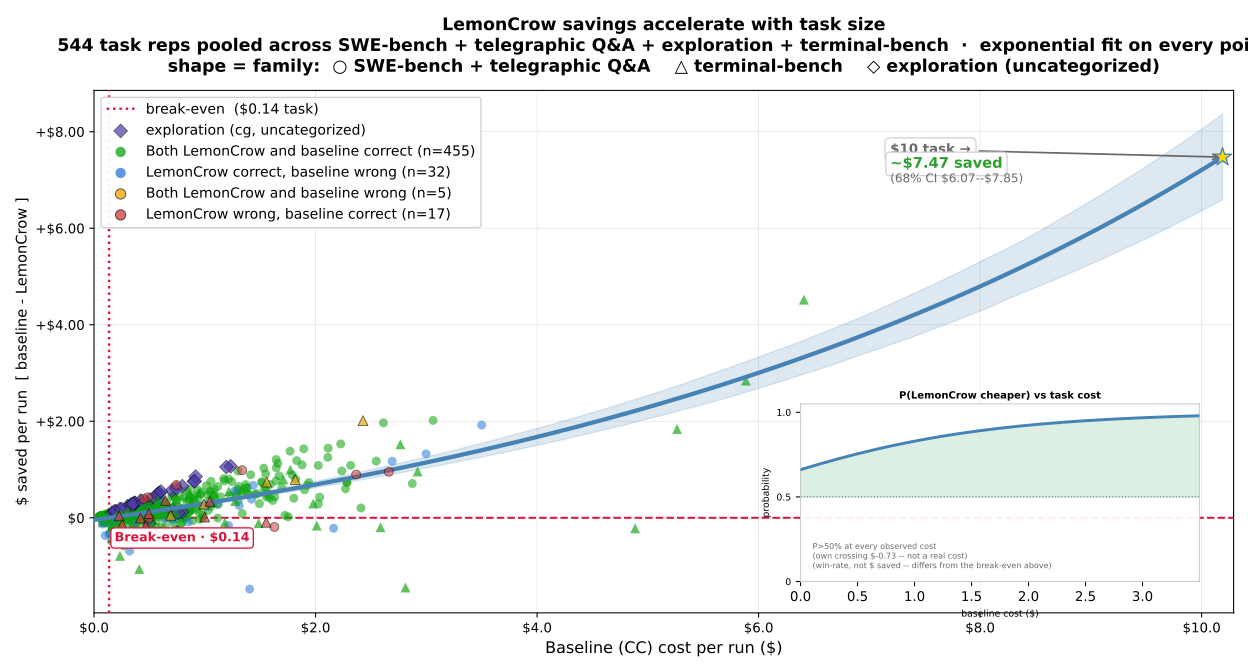
Across pinned runs
The chart is supporting evidence, not the headline. Every point is a pinned benchmark run, and the full methodology remains public so the efficiency claim can be inspected rather than summarized away.
The runtime loop
Context
Select the files, tool output, and history the task needs instead of paying to carry everything forward again and again.
Reuse
Preserve cache locality and reuse what is already known instead of rebuilding the same expensive context on every turn.
Execution
Control routing, tool payloads, repeated loops, and spend ceilings without blindly pruning information the agent still needs.
Measurement
Measure the recorded execution path, usage, cost, and outcomes instead of estimating savings from prompt size alone.
Controls underneath the four levers
Some fleet-level controls are part of the enterprise Runtime direction and are not all generally available yet. Coding-agent runtime optimization and matched efficiency measurements are available today.
Runtime evidence · read-only
Replay recorded coding-agent sessions locally without rerunning the model. See searches, reads, tool calls, token use, and repeated work so runtime savings can be tied to the execution path instead of estimated from a smaller prompt.
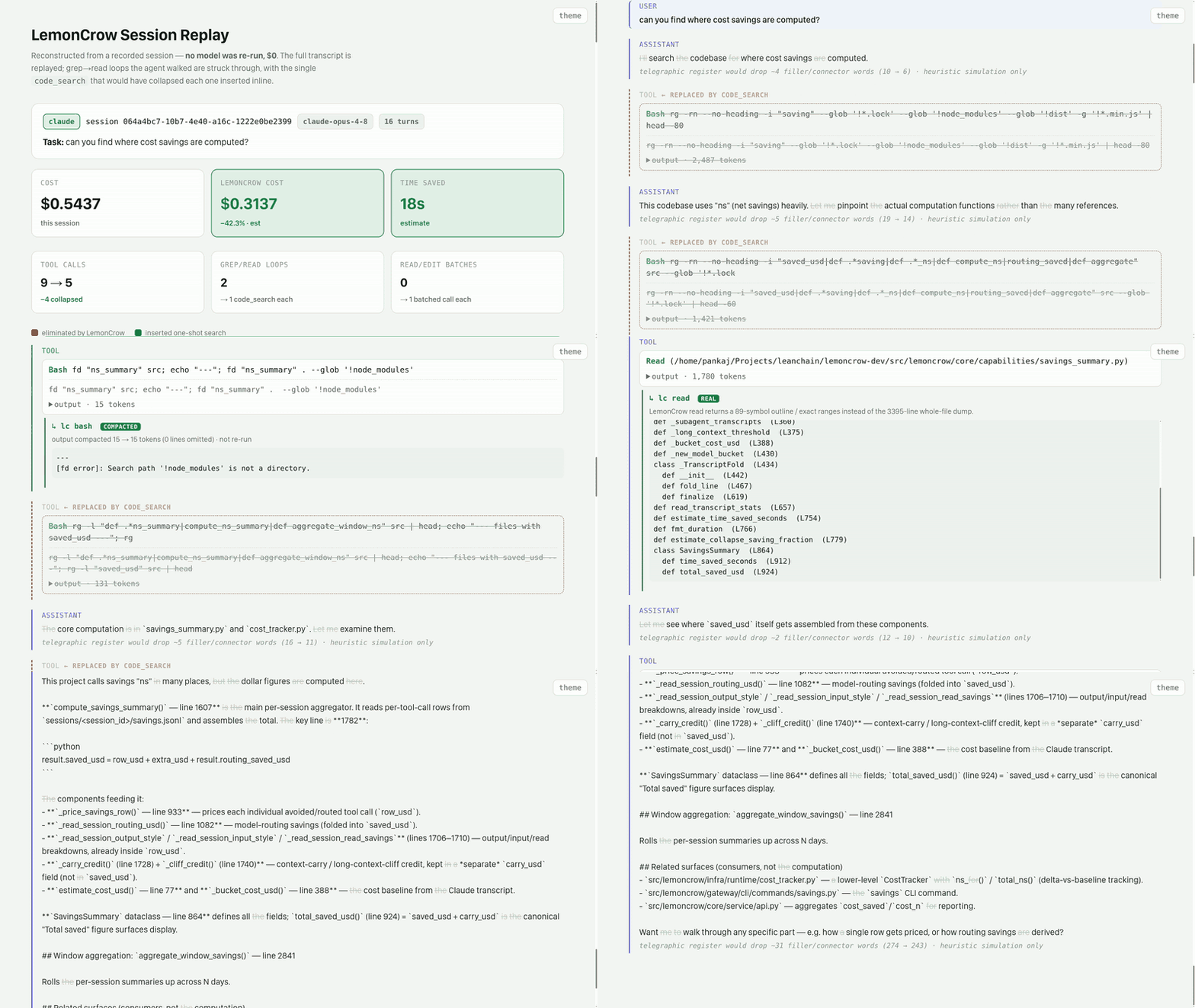
Summarize recorded work
$ lemoncrow session statsReplay the recorded tool path
$ lemoncrow session replayScans local agent sessions · temporary store · no login · no API keys.
Beyond coding
Coding is the shipped and measured wedge today. The same runtime architecture extends to other long-running agent workloads where context, tools, retries, routing, and spend need one execution boundary.
Long conversations, repeated knowledge, retries, and tool payloads create the same context-waste problem.
Search-heavy multi-step agents accumulate observations and repeated context particularly quickly.
Shared system context, retrieval, tools, and model routing need one measurable execution boundary.
Workflow agents need loop ceilings, budgets, credentials, routing, and auditable model traffic.
Go deeper
Use the local session tools to inspect coding-agent waste today. For private deployment, model-traffic policy, remote intelligence, and managed workspaces, the Enterprise plane builds on the same Runtime.